

Why Join Dance Classes: Transform Your Confidence and Health
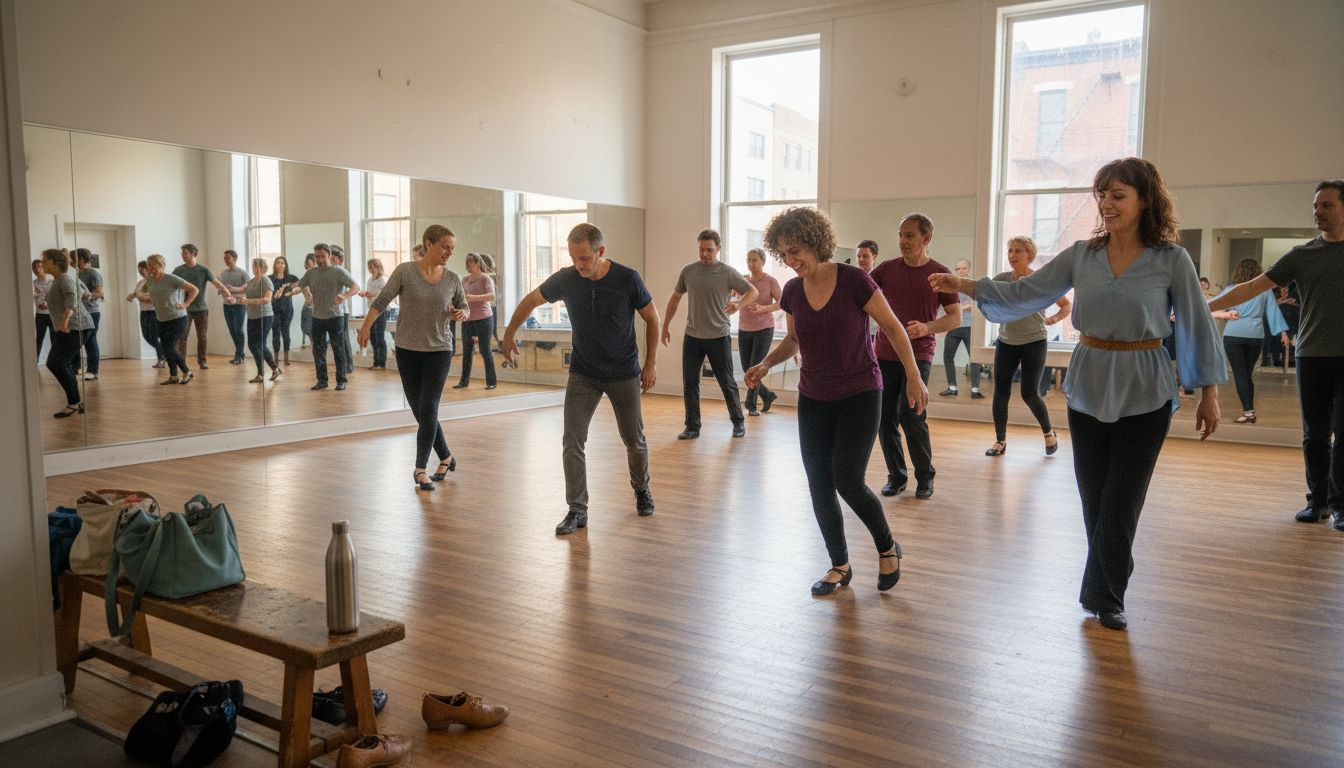
Most couples preparing for their wedding in Upstate South Carolina worry about how they’ll look during their first dance. The truth is, ballroom dance classes offer an inviting space where you learn real skills, not just fancy moves. With expert instructors guiding you, you’ll experience music, movement, and social connection while gaining confidence and sharing quality time together. Discover practical choreography options and supportive group classes that turn nervous anticipation into genuine excitement for your big moment.
Table of Contents
- Ballroom Dance Classes Explained And Myths
- Varieties Of Ballroom Dance Styles Offered
- How Classes Foster Confidence And Skills
- Health And Wellness Benefits Of Dancing
- Financial, Social, And Practical Factors To Consider
Key Takeaways
| Point | Details |
|---|---|
| Accessible Learning | Ballroom classes are welcoming and designed for all ages and skill levels, promoting partnered movement and social confidence. |
| Skill Development | Classes focus on real skills like technical foundations, partner communication, and musicality, rather than memorizing choreography. |
| Cost-Effective Options | Group classes provide an affordable entry point, reducing financial barriers for those new to dancing. |
| Health Benefits | Dancing promotes physical fitness and mental well-being, delivering a full-body workout while enhancing social connections. |
Ballroom dance classes explained and myths
Ballroom dancing gets a bad reputation. Many people imagine stuffy formal events or believe it’s only for naturally gifted dancers. The reality? Ballroom classes are welcoming, practical spaces where regular people learn partnered movement, build confidence, and have fun together.
Let’s clear up what ballroom dancing actually is and what it isn’t.
What Ballroom Classes Really Teach
Ballroom dancing blends music, movement, and social connection into a structured learning experience. Classes focus on teaching both the lead and follow roles, so whether you’re planning a first dance or simply want to learn, you’ll develop real skills.
Here’s what happens in a typical class:
- Technical foundations: Steps, timing, posture, and frame (how partners hold each other)
- Partner communication: Learning to lead and follow through subtle body signals
- Musicality: Connecting movement to rhythm and musical phrasing
- Confidence building: Practicing in a supportive group environment with partner rotation during social dance classes
You’re not memorizing choreography. You’re learning patterns you can adapt, improvise, and use at any event.
Ballroom dancing is accessible to all ages and skill levels—it’s about learning fundamental partnered movement and building genuine social confidence.
Common Myths About Ballroom Dance
Myth #1: “You need a partner to start.”
Wrong. Group classes include partner rotation, meaning you dance with different people each class. This actually helps you learn faster because you adapt to different partners.
Myth #2: “It’s only for elegant, athletic people.”
Ballroom dancing is for everyone. Research on dance as an educational form demonstrates it encourages confidence, communication, and social engagement for all ages regardless of prior experience or physical background. Couples training for their wedding day come in all shapes, backgrounds, and fitness levels.
Myth #3: “You’ll look foolish if you’re a beginner.”
Every single dancer in your class started exactly where you are. Instructors design beginner classes specifically for newcomers, and you progress at your own pace.
Myth #4: “It’s expensive and intimidating.”
Many studios offer introductory packages designed to be affordable and welcoming. Group classes provide excellent value compared to private lessons.
Myth #5: “Ballroom is outdated or boring.”
Ballroom dancing is alive and thriving. It’s used at weddings, social events, competitions, and parties. The styles range from elegant Waltz to energetic Quickstep to Latin rhythms like Cha-Cha and Rumba.
Why Couples Choose Ballroom Classes
For engaged couples in Upstate South Carolina, ballroom classes offer specific advantages:
- First dance confidence: You’ll actually enjoy your wedding day instead of worrying about your feet
- Quality time together: Partner training strengthens communication in a fun, structured setting
- Memorable moment: A polished first dance becomes one of your favorite wedding memories
- Flexibility: Start with beginner ballroom dance lessons or move to private choreography for your specific song
Most couples find that learning together builds genuine connection—you’re literally moving as one unit.
Pro tip: Start your dance journey 3-4 months before your wedding to gain comfort and polish without feeling rushed. This timeline allows you to build foundational skills in group classes before adding personalized choreography if desired.
Varieties of ballroom dance styles offered
Ballroom dancing isn’t one style—it’s a whole world of movement. Different dances have completely different rhythms, attitudes, and origins. For couples planning their first dance, understanding these varieties helps you choose a style that matches your personality and wedding vibe.
Ballroom dances split into two main categories: Standard and Latin. Standard dances are smoother and more flowing, while Latin dances are sharper, more energetic, and rhythmic.
Standard Dances: Smooth and Elegant
Standard dances emphasize continuous movement and connection between partners. You stay in closed position (close embrace) throughout most of the dance.
Here are the primary Standard styles:
- Waltz: The classic choice for first dances. Graceful, romantic, and relatively easy to learn.
- Tango: Dramatic and passionate. Features sharp, staccato movements and lots of attitude.
- Foxtrot: Smooth, flowing, and sophisticated. Often called the most “American” ballroom dance.
- Viennese Waltz: Faster and more energetic than regular Waltz. Requires more stamina but feels incredibly elegant.
- Quickstep: Fast-paced and playful. Perfect if you want energy and fun in your first dance.
Standard dances work beautifully for wedding first dances because they keep you and your partner connected and moving as one unit.
Latin Dances: Fun and Energetic
Latin dances emphasize individual expression and hip movement. Partners separate and come together, allowing for more personality and flair.
The main Latin styles include:
- Cha-Cha: Playful and flirty with a distinctive triple step. Great if you want something upbeat.
- Rumba: Sensual and romantic, but with energy underneath. Sometimes called the “dance of love.”
- Samba: Brazilian rhythm with bouncing movement. Joyful and celebratory.
- Paso Doble: Spanish, dramatic, and intense. Less common for weddings but incredibly impactful.
- Jive: Fast, fun, and bouncy. Takes more coordination but delivers pure energy.
Latin dances let your individual personalities shine. Understanding the characteristics of ballroom dance styles helps you match the dance to your song and mood.
Here’s a helpful overview of major ballroom dance styles:
| Dance Style | Typical Mood | Ideal for Couples | Music/Tempo |
|---|---|---|---|
| Waltz | Graceful, romantic | First dances, beginners | Slow, melodic |
| Tango | Dramatic, passionate | Confident pairs | Medium, staccato |
| Foxtrot | Elegant, easygoing | All skill levels | Moderate, swing |
| Viennese Waltz | Vibrant, energetic | Adventurous couples | Fast, classical |
| Quickstep | Lively, playful | Fun celebrations | Fast, upbeat |
| Cha-Cha | Flirty, playful | Joyful couples | Upbeat, Latin |
| Rumba | Sensual, romantic | Expressive pairs | Slow, Latin |
| Samba | Festive, bouncy | Party atmospheres | Fast, Latin |
| Paso Doble | Intense, dramatic | Show-stoppers | Medium, Spanish |
| Jive | Fast, energetic | High-energy pairs | Fast, rock/pop |
Your first dance should reflect who you are as a couple—whether that’s smooth and connected (Standard) or energetic and playful (Latin).
Choosing Your Style
Think about your song’s tempo, your comfort level, and what you want your guests to feel. A slower Waltz or Rumba works if you want romance and elegance. A Quickstep or Cha-Cha creates energy and joy.
When you start classes, instructors can help you test different styles with your music. You’ll quickly discover what feels natural and exciting for both of you.
Pro tip: Try learning one Standard style and one Latin style in group classes before deciding on your wedding dance. This gives you hands-on experience with different rhythms and helps you choose confidently.
How classes foster confidence and skills
Walking into a ballroom class nervous about your dancing ability is completely normal. What surprises most people is how quickly that anxiety transforms into genuine confidence. Classes work because they teach you real skills while building emotional resilience in a supportive environment.
Confidence doesn’t appear overnight. It builds through repetition, small wins, and the realization that everyone around you is also learning.
Building Physical Confidence Through Technique
Your body learns before your mind catches up. In classes, instructors teach proper posture, frame, and movement patterns that make dancing feel natural and controlled.
This happens gradually:
- Week 1-2: You learn basic steps and how to hold your partner
- Week 3-4: Steps feel less mechanical; your body remembers the patterns
- Week 5-8: You stop thinking about footwork and can focus on connection and musicality
- Week 8+: Dancing feels automatic, and you can add your own flair
When your body knows what to do, your mind relaxes. That’s when real confidence kicks in.
Partner Communication as Confidence Building
Ballroom dancing requires constant, subtle communication between partners. The leader guides through posture and gentle pressure. The follower responds by feeling and adjusting. This back-and-forth builds trust.
For couples planning a wedding, this matters enormously. You’re literally learning to move together as one unit. When your groom leads and you follow—or vice versa—you develop an unspoken language that strengthens your relationship.
Research shows that ballroom dance teaching develops posture, movement skills, and partner communication, which directly improves social confidence and emotional expression. You’re not just learning steps; you’re learning how to understand and respond to another person physically.
Confidence in ballroom dancing transfers directly to confidence in your relationship and how you present yourselves together.
Social Confidence in Group Settings
Group classes include partner rotation. You dance with different people each session. This might sound intimidating, but it’s actually powerful confidence training.
Why? Because you learn that:
- You can adapt to different partners and styles
- You’re not alone in being a beginner—everyone is learning
- Small mistakes don’t matter—dancers are supportive and focused on improving
- You belong in the ballroom community
By your wedding day, you’ve already performed in front of classmates multiple times. Dancing with one person you love feels easy by comparison.
Real Skills That Last
Ballroom dancing teaches coordination, musicality, and rhythm—skills that stick with you forever. You’re developing neural pathways that improve overall coordination and balance, benefits that extend beyond the dance floor.
Couples who learn together gain confidence not just in dancing but in partnering. You learn each other’s rhythms, strengths, and styles. That’s priceless.
Pro tip: Attend classes consistently for at least 6-8 weeks before evaluating your progress. Confidence builds through repetition, and you’ll notice dramatic improvements if you commit to regular practice.
Health and wellness benefits of dancing
Ballroom dancing isn’t just fun—it’s one of the best things you can do for your physical and mental health. When you join classes, you’re investing in your fitness, emotional resilience, and overall well-being. The benefits start immediately and compound over time.
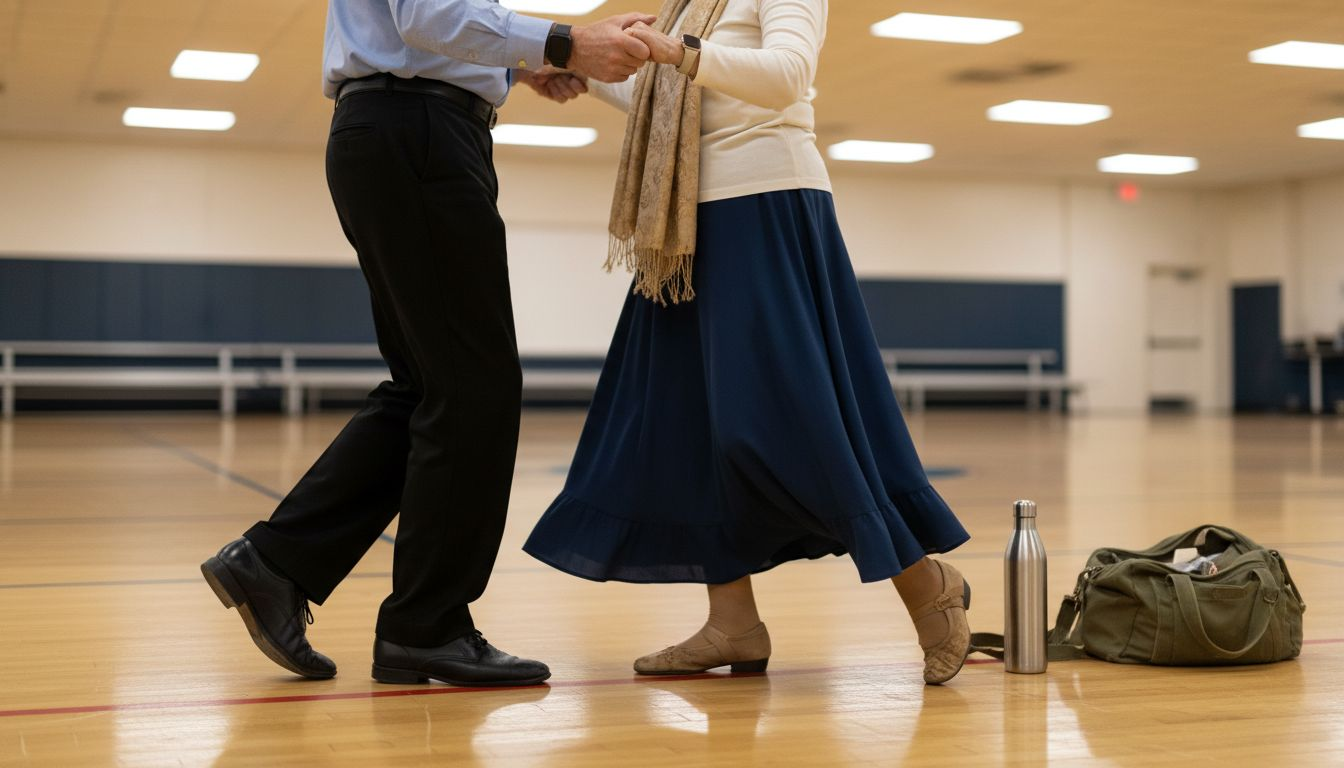
Unlike punishing gym routines, dancing feels like play. Your body gets stronger, your mood improves, and you don’t dread going back next week.
Physical Health Benefits
Dancing is a full-body cardiovascular workout that engages muscles you don’t typically use in daily life. Your heart gets stronger, your endurance increases, and you burn calories without it feeling like exercise.
Key physical benefits include:
- Cardiovascular fitness: Your heart and lungs work harder, improving circulation and stamina
- Muscle strength and tone: You build lean muscle in legs, core, back, and arms
- Flexibility and range of motion: Ballroom movements stretch and lengthen muscles
- Balance and coordination: You develop proprioception and spatial awareness
- Joint mobility: Controlled movements improve joint health and reduce stiffness
- Posture improvement: Classes teach you to stand taller and move with better alignment
Many dancers report feeling stronger and more energized after just a few weeks. Your body adapts quickly to the rhythmic, repetitive movements.
Mental Health and Emotional Well-being
Dancing is powerful medicine for your mind. When you move to music with a partner, your brain releases endorphins—natural mood elevators. Stress melts away as you focus entirely on the present moment.
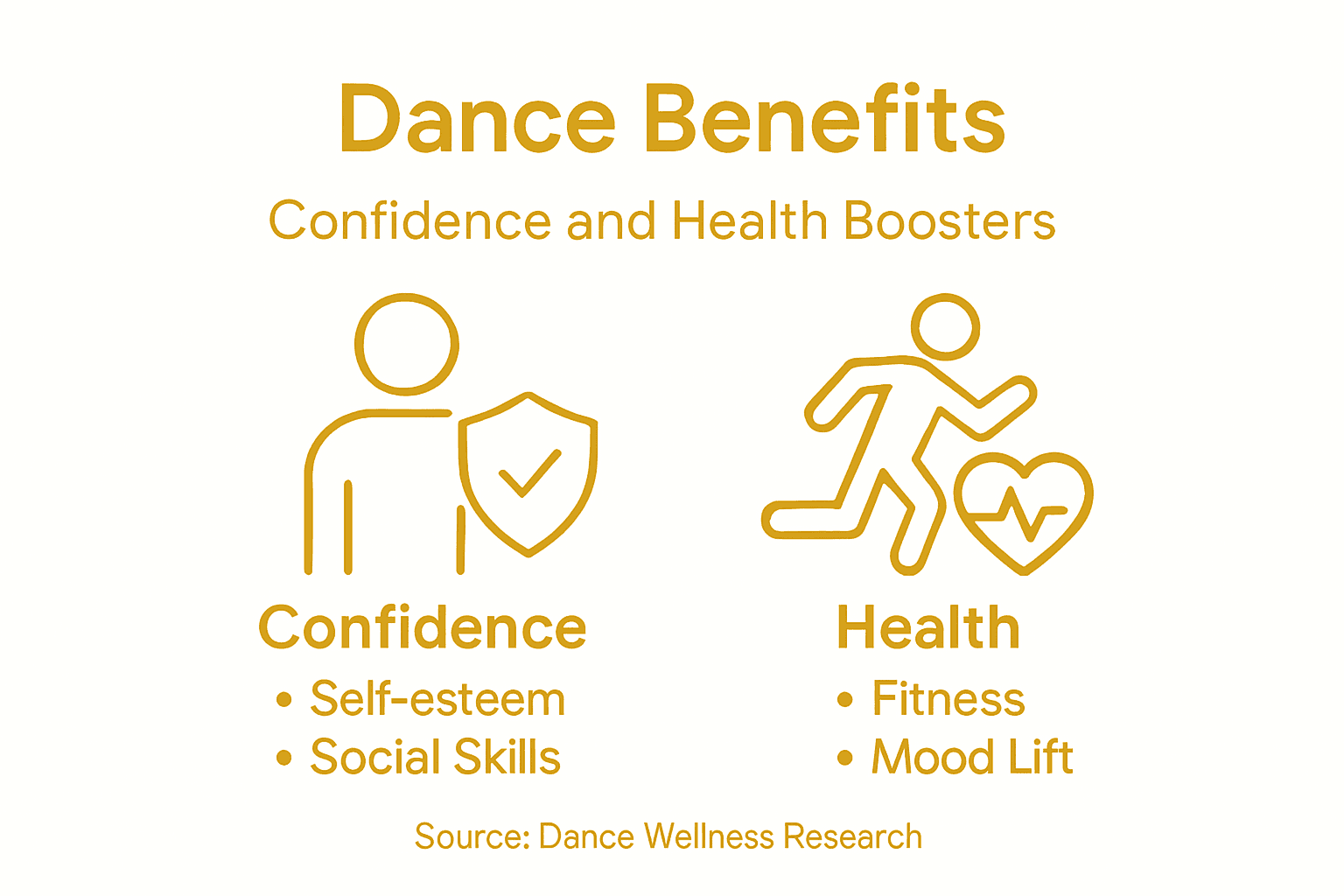
Research confirms that dance improves neurological function, emotional health, and overall psychological well-being across diverse populations. The benefits extend far beyond the dance floor.
Mental health improvements include:
- Reduced anxiety and stress: Movement releases tension and calms your nervous system
- Improved mood: Endorphins and the social environment boost your emotional state
- Better sleep quality: Physical activity helps you sleep deeper and longer
- Increased motivation: Success in classes builds momentum in other life areas
- Enhanced emotional expression: Dancing provides a healthy outlet for feelings
Dance combines physical activity, social connection, and creative expression—a trifecta for mental health that few activities match.
Social and Cognitive Benefits
Ballroom classes aren’t solitary. You’re learning alongside others, building friendships, and strengthening your partner relationship. That social connection matters enormously for long-term health.
Additional benefits include:
- Cognitive stimulation: Learning new patterns improves memory and mental sharpness
- Social connection: You build genuine friendships with classmates
- Relationship strengthening: Couples develop deeper communication and trust
- Sense of belonging: You join a welcoming community
- Confidence boost: Mastering skills translates to confidence in other areas
For couples planning a wedding, these benefits compound. You’re exercising together, managing a shared challenge, and creating memories in the process.
Long-term Health Impact
The changes aren’t temporary. People who dance regularly maintain better cardiovascular health, stronger bones, and sharper minds as they age. Dancing becomes a habit—something you look forward to, not something you force yourself to do.
Pro tip: Start with two classes per week to feel noticeable improvements in fitness and mood within four weeks. Consistency matters more than intensity when building lasting health benefits.
Financial, social, and practical factors to consider
Joining dance classes requires more than just showing up. You need to think about cost, scheduling, transportation, and whether the class environment feels right for you. Being honest about these factors upfront helps you commit long-term.
The good news? There are solutions to almost every barrier. You just need to know what to expect.
Understanding Class Costs
Ballroom classes come at different price points depending on the format. Group classes cost less than private lessons, making them the affordable entry point for most couples.
Typical costs break down like this:
- Group classes: $60-150 per month for unlimited or weekly classes
- Drop-in rates: $15-30 per single class
- Introductory packages: $40-80 for a starter special (often 4-6 classes)
- Private lessons: $75-200+ per hour depending on instructor experience
- Wedding choreography: $500-2,000+ for a custom first dance
Many studios offer introductory specials designed specifically for nervous beginners. These packages reduce financial risk while you test whether dancing is for you.
Compare group and private ballroom classes at a glance:
| Factor | Group Classes | Private Lessons |
|---|---|---|
| Cost | Lower, bundles | Higher, hourly rate |
| Social Learning | Peer rotation | One-on-one focus |
| Feedback | General, group-wide | Tailored, specific |
| Flexibility | Fixed schedule | Custom scheduling |
| Progress Speed | Moderate, peer-driven | Rapid, instructor-led |
| First Dance Prep | Broad foundations | Custom choreography |
Research on financial and socioeconomic barriers to dance training access shows that cost significantly impacts participation. But group classes remain the most accessible option for building foundational skills before investing in private instruction.
Time and Schedule Considerations
Dancing requires consistent practice to see results. You can’t skip weeks and expect progress. Finding a class time that works with your schedule matters more than finding the perfect class.
Think about these questions:
- Can you commit to a specific time weekly for 6-8 weeks minimum?
- Do you have childcare arranged if needed?
- Is the studio location convenient to your home or workplace?
- Can both partners attend the same class time?
If Tuesday evenings don’t work, don’t force it. Find a Thursday class. Consistency beats perfection.
The best class is the one you’ll actually attend every week. Location and timing matter more than studio reputation.
Location and Accessibility
Upstate South Carolina offers several options, but proximity affects whether you’ll stick with classes. A studio 10 minutes away gets visited more often than one 30 minutes away, especially after long work days.
Check what’s available:
- Nearby studios: How many ballroom studios serve your area?
- Parking: Is convenient parking available?
- Facility quality: Do the studios feel welcoming and well-maintained?
- Class variety: Do they offer times and styles that match your needs?
Social and Emotional Factors
The instructor and classmates matter. You’re learning in front of others, which requires vulnerability. An encouraging, welcoming environment makes all the difference.
Consider:
- Instructor style: Do they teach with patience and humor?
- Class atmosphere: Are dancers supportive or competitive?
- Group dynamics: Do you feel comfortable with the mix of students?
- Couple-friendliness: For engaged couples, does the studio emphasize partner connection?
Most studios offer trial classes. Use them. You’ll know within one class whether the environment is right for you.
Making It Work Practically
Remove obstacles before they derail your progress. Book classes in advance. Set phone reminders. Tell your partner you’re committed. Treat it like any other important appointment.
For couples, the investment becomes shared. You’re not just paying for yourself—you’re investing in a shared experience and skill that benefits your relationship and wedding day.
Pro tip: Start with an introductory package or single drop-in class to assess cost, schedule, location, and instructor fit before committing to a monthly membership. This low-risk trial clarifies whether the studio is right for you.
Transform Your Confidence and Health with Ballroom Dance at Rondo Ballroom
Many readers discover their biggest challenge is building real confidence in partnered movement while improving physical and emotional well-being. The article highlights how consistent ballroom dance classes unlock technical skills, partner communication, and social confidence that last well beyond the dance floor. You want to feel relaxed yet energized through dance, gain control over your body, and develop a meaningful connection with your partner or new dance community. That is exactly what we focus on at Rondo Ballroom in Upstate South Carolina.
Our Group Dance Classes provide a welcoming environment for dancers of all levels to learn fundamentals with partner rotation. This builds the skills and emotional resilience described in the article. Whether you seek improved posture, coordination, or your memorable wedding first dance, our studio offers tailored support through Private Dance Lessons and expert Wedding Dance Choreography. Start with confidence and health in mind and watch yourself transform.
Ready to take the next step toward improved fitness, social connection, and ballroom mastery? Visit Rondo Ballroom today to explore class options, schedule a trial, or ask about special introductory packages designed to make beginning easy and affordable. Your journey to dance confidence and lasting health starts now.
Frequently Asked Questions
How can dance classes improve my confidence?
Dance classes build confidence through repetition, small wins, and a supportive environment where everyone is learning together. You gain physical and social skills that translate to greater ease in various situations.
What are the health benefits of taking dance classes?
Dance classes provide a full-body cardiovascular workout, improving cardiovascular fitness, muscle strength, flexibility, balance, and posture. They also enhance mental health by reducing stress and improving mood through the release of endorphins.
Do I need a partner to join dance classes?
No, you don’t need a partner to start. Many group classes incorporate partner rotation, allowing you to dance with different individuals, which helps you learn faster and adapt to various styles.
How long does it take to see progress in dance classes?
Most people notice improvements in their dancing abilities within a few weeks of consistent practice, typically after attending classes for 6-8 weeks. Regular attendance fosters skill mastery and builds confidence in your movements.
Recommended
- Ballroom Dance Classes
- Explore Ballroom Dancing Styles at Rondo Ballroom Dance Studio
- Social Dance Classes / Our Dance Classes | Rondo Ballroom Dance Studio
- Claim your FREE 45-minute Wedding Dance Consultation today!
- Dance Floor Lighting: Transforming Wedding Receptions
- How to Join Art Communities: Connect and Collaborate in 2025 – The Mansion Press
Add comment
Comments